
Bitcoin vs Ethereum: What’s the Difference Between BTC and ETH?
Compare Bitcoin and Ethereum, including purpose, supply, consensus, transaction design, smart contracts, fees, and how BTC and ETH are used on Highrollz.
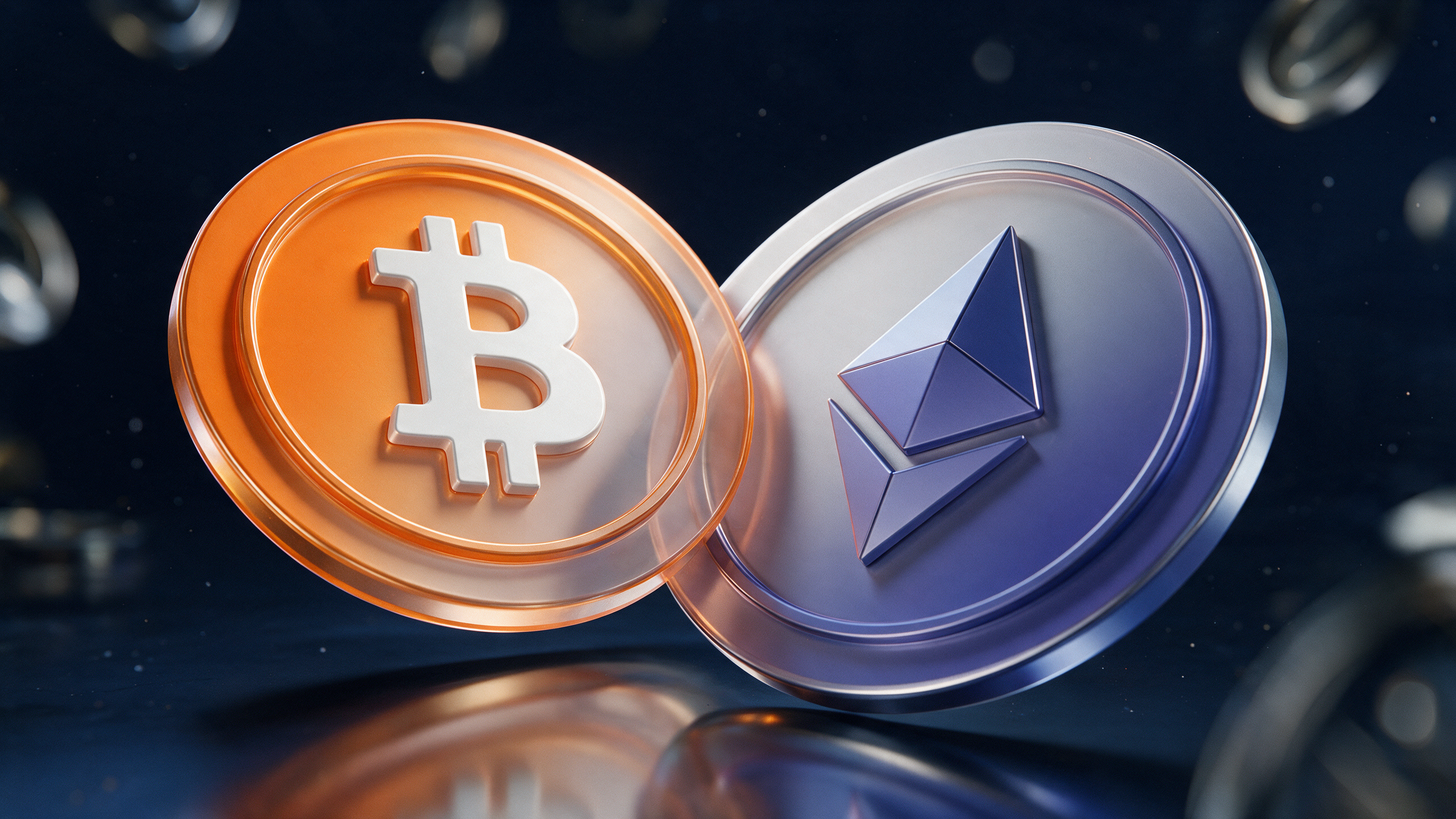
Bitcoin vs Ethereum: What’s the Difference Between BTC and ETH?
Bitcoin and Ethereum are the two best-known blockchain networks, but they were created for different purposes.
Bitcoin was designed primarily as decentralized digital money, while Ethereum was built as a programmable blockchain that can support smart contracts, decentralized applications, tokens, and other blockchain-based services.
Their native assets are BTC for Bitcoin and ETH for Ethereum.
Highrollz supports both BTC and ETH, allowing players to use supported deposits across eligible casino, live casino, Originals, sportsbook, live betting, and esports products.
In this guide, we compare Bitcoin vs Ethereum, explain how they differ, and look at which type of user may prefer one over the other.
Bitcoin vs Ethereum at a Glance
| Feature | Bitcoin | Ethereum |
|---|---|---|
| Native Asset | BTC | ETH |
| Primary Purpose | Decentralized digital money and value transfer | Programmable blockchain for smart contracts and applications |
| Consensus | Proof of Work | Proof of Stake |
| Supply Model | Maximum 21 million BTC | No fixed maximum supply |
| Smart Contracts | Limited compared with Ethereum | Core part of the network |
| Typical Use | Payments, transfers, holding BTC | Payments, apps, DeFi, tokens, smart contracts |
What Is Bitcoin?
Bitcoin is a decentralized blockchain network launched in 2009.
Its native asset, BTC, was designed as a form of peer-to-peer digital money that can be transferred without relying on a traditional bank or central payment processor.
Bitcoin transactions are recorded on a public blockchain and verified by miners using a Proof of Work consensus mechanism.
Bitcoin has a maximum supply of 21 million BTC, making scarcity one of its defining characteristics.
If you already hold BTC, you may also want to read our guide on how to store Bitcoin safely.
What Is Ethereum?
Ethereum is a programmable blockchain network launched in 2015.
Its native cryptocurrency is Ether (ETH).
Ethereum can process digital payments, but its main distinction is the ability to run smart contracts and decentralized applications directly on the blockchain.
This has made Ethereum a major platform for:
Decentralized finance
Stablecoins
NFTs
Blockchain games
Token creation
Web3 applications
For a deeper introduction, read our guide to what Ethereum is and how ETH works.
What Is the Main Difference Between Bitcoin and Ethereum?
The clearest difference is their original purpose.
Bitcoin was designed primarily as decentralized digital money.
Ethereum was designed as a programmable blockchain platform.
Bitcoin focuses heavily on transferring and securing BTC, while Ethereum allows developers to build applications that can automatically execute blockchain-based logic.
This difference has shaped the ecosystems that developed around each network.
Bitcoin vs Ethereum: Purpose
Bitcoin is commonly used for:
Peer-to-peer payments
Transferring value
Holding BTC as a digital asset
Using BTC on supported platforms
Ethereum is commonly used for:
Sending ETH
Paying blockchain transaction fees
Interacting with decentralized applications
DeFi
Tokens and NFTs
Smart contracts
Bitcoin vs Ethereum: Supply
Bitcoin has a fixed maximum supply.
No more than 21 million BTC can ultimately exist under Bitcoin's current monetary rules.
Ethereum does not have the same fixed maximum supply model.
ETH issuance and burning are instead influenced by Ethereum's network rules, including validator rewards and transaction-fee burning.
This means the two assets follow very different monetary models.
Bitcoin vs Ethereum: Proof of Work vs Proof of Stake
Bitcoin and Ethereum currently use different consensus mechanisms.
Bitcoin uses Proof of Work.
Miners use computing resources to compete to add new blocks and help secure the network.
Ethereum uses Proof of Stake.
Validators stake ETH and participate in validating blocks and securing the network.
| Feature | Bitcoin | Ethereum |
|---|---|---|
| Consensus | Proof of Work | Proof of Stake |
| Network Participants | Miners | Validators |
| Native Asset Role | BTC rewards and transactions | ETH staking, gas fees, and transactions |
Bitcoin vs Ethereum: Smart Contracts
Ethereum was specifically built to support programmable smart contracts.
A smart contract is code stored on the blockchain that can automatically execute actions when its programmed conditions are met.
This makes it possible to build services such as:
Decentralized exchanges
Lending protocols
Blockchain games
NFT marketplaces
Stablecoins
On-chain financial applications
Bitcoin has programmable capabilities, but its base-layer design is much more focused on Bitcoin transactions and monetary security than on running general-purpose decentralized applications.
Bitcoin vs Ethereum: Transaction Fees
Both Bitcoin and Ethereum users may pay network fees when sending transactions.
Bitcoin transaction fees can vary depending on network demand and transaction data.
Ethereum transaction fees are commonly referred to as gas fees.
Ethereum gas prices can change significantly depending on network activity and the complexity of the blockchain interaction.
There is no permanently fixed answer to which network is cheaper because fees can change over time.
Bitcoin vs Ethereum: Transaction Speed
Bitcoin and Ethereum process transactions differently.
Bitcoin produces a new block approximately every ten minutes on average.
Ethereum produces blocks much more frequently.
However, transaction speed should not be judged only by block time.
Platforms may require different numbers of blockchain confirmations before crediting a deposit, so the actual time before funds become available can vary.
Bitcoin vs Ethereum: Price Volatility
Both BTC and ETH are market-traded cryptocurrencies.
Their values can rise or fall substantially.
This makes them different from stablecoins such as USDT and USDC, which are designed to remain close to the value of one US dollar.
If you deposit BTC or ETH into a crypto platform, the dollar-equivalent value of your holdings can change even before you place a bet.
Bitcoin vs Ethereum vs Stablecoins
| Feature | Bitcoin | Ethereum | Stablecoins |
|---|---|---|---|
| Example Asset | BTC | ETH | USDT / USDC |
| Price Behaviour | Market driven | Market driven | Designed to track another asset |
| Primary Focus | Digital money and value transfer | Programmable blockchain | Stable-value crypto transfers |
| Volatility | Can be high | Can be high | Designed to be relatively low |
Read our guide to stablecoins if you want to understand the difference in more detail.
Which Is More Decentralized: Bitcoin or Ethereum?
Both Bitcoin and Ethereum are decentralized blockchain networks, but they use different architectures, governance structures, consensus systems, and developer ecosystems.
Decentralization can also be measured in different ways, including:
Number and distribution of network participants
Validator or mining concentration
Client diversity
Development influence
Token ownership distribution
Because of this, reducing decentralization to one simple number can be misleading.
Which Has More Applications: Bitcoin or Ethereum?
Ethereum has a much larger general-purpose smart contract ecosystem on its base network.
Thousands of applications and tokens have been created using Ethereum-compatible smart contracts.
Bitcoin's ecosystem is more heavily centered around BTC itself, payments, monetary infrastructure, and technologies built around the Bitcoin network.
Both ecosystems continue to evolve, but they serve different primary roles.
Bitcoin vs Ethereum for Crypto Casino Deposits
Both BTC and ETH can be used to fund a Highrollz account.
The practical differences mainly involve:
Which cryptocurrency you already hold
Network fees at the time of transfer
Transaction processing and confirmation requirements
Price volatility
Your preferred wallet or exchange
Neither currency changes the underlying casino odds.
Does BTC or ETH Affect Casino Odds?
No.
The cryptocurrency used to fund an account does not change:
RTP
House edge
Game outcomes
Sportsbook odds
Bet settlement
Bitcoin and Ethereum simply provide different ways of funding the account.
Can You Play Casino Games With BTC and ETH?
Yes.
Highrollz supports both Bitcoin and Ethereum.
Once a supported deposit has been credited, your balance can be used across eligible areas including:
Online slots
Live casino
Table games
Highrollz Originals
Can You Bet on Sports With Bitcoin and Ethereum?
Yes.
Supported BTC and ETH deposits can also fund eligible sportsbook and esports activity on Highrollz.
Highrollz covers sports including:
Football
Basketball
Tennis
MMA and combat sports
American football
Baseball
Ice hockey
Esports
And many other sports
How to Deposit Bitcoin or Ethereum on Highrollz
1. Open Your Highrollz Wallet
Log in and open your Wallet.
2. Select Deposit
Choose either Bitcoin (BTC) or Ethereum (ETH).
3. Review the Deposit Details
Check the asset and blockchain information displayed by Highrollz.
4. Copy the Wallet Address
Copy the deposit address shown on screen.
5. Open Your External Wallet or Exchange
Go to the platform where you currently store your BTC or ETH.
6. Verify the Asset and Network
Make sure the cryptocurrency and network match the deposit instructions displayed by Highrollz.
7. Check the Address and Amount
Verify all details before confirming.
8. Send the Transaction
Confirm the transfer and wait for the required blockchain confirmations.
Should You Use Bitcoin or Ethereum?
The right choice depends on what you want to do.
Bitcoin may suit users who want:
A payment-focused decentralized cryptocurrency
A fixed maximum supply
Exposure to the Bitcoin ecosystem
Ethereum may suit users who want:
Access to smart contracts and decentralized applications
Participation in Ethereum-based DeFi
Use of ETH across a broader programmable blockchain ecosystem
For casino deposits, the simplest option may simply be whichever supported cryptocurrency you already hold and prefer to use.
Frequently Asked Questions About Bitcoin vs Ethereum
Is Bitcoin the same as Ethereum?
No. Bitcoin and Ethereum are separate blockchain networks with different native assets, designs, and primary purposes.
What is the difference between BTC and ETH?
BTC is the native cryptocurrency of Bitcoin, while ETH is the native cryptocurrency of Ethereum.
Which came first, Bitcoin or Ethereum?
Bitcoin launched in 2009. Ethereum launched later, in 2015.
Does Bitcoin have smart contracts?
Bitcoin supports programmable transaction logic, but Ethereum was specifically designed around a much broader general-purpose smart contract system.
Does Ethereum have a maximum supply?
Ethereum does not have a fixed maximum supply equivalent to Bitcoin's 21 million BTC limit.
Is ETH a stablecoin?
No. ETH is a market-traded cryptocurrency whose value can rise or fall.
Can I deposit Bitcoin on Highrollz?
Yes. Highrollz supports BTC deposits.
Can I deposit Ethereum on Highrollz?
Yes. Highrollz supports ETH deposits.
Which is better for gambling, Bitcoin or Ethereum?
Neither is automatically better for every player. Practical considerations include which asset you already hold, current network fees, transaction requirements, and your own preference.
Does using BTC or ETH affect my chances of winning?
No. The cryptocurrency used to deposit does not affect casino RTP, house edge, sportsbook odds, or game outcomes.
Use Bitcoin or Ethereum on Highrollz
Bitcoin and Ethereum are both major blockchain ecosystems, but they solve different problems.
Bitcoin focuses primarily on decentralized digital money and value transfer, while Ethereum provides a programmable network for smart contracts, decentralized applications, and digital assets.
Highrollz supports both BTC and ETH across eligible casino, live casino, Originals, sportsbook, live betting, and esports products.
Before sending either cryptocurrency, always verify your asset, wallet address, blockchain network, transaction fee, and amount.
Play responsibly and only gamble with funds you can afford to lose.
