
What Is a Stablecoin? How Stablecoins Work, USDT vs USDC & Why They Matter
Learn what stablecoins are, how they work, how USDT and USDC compare, their benefits and risks, and why crypto users use them for payments and gambling.
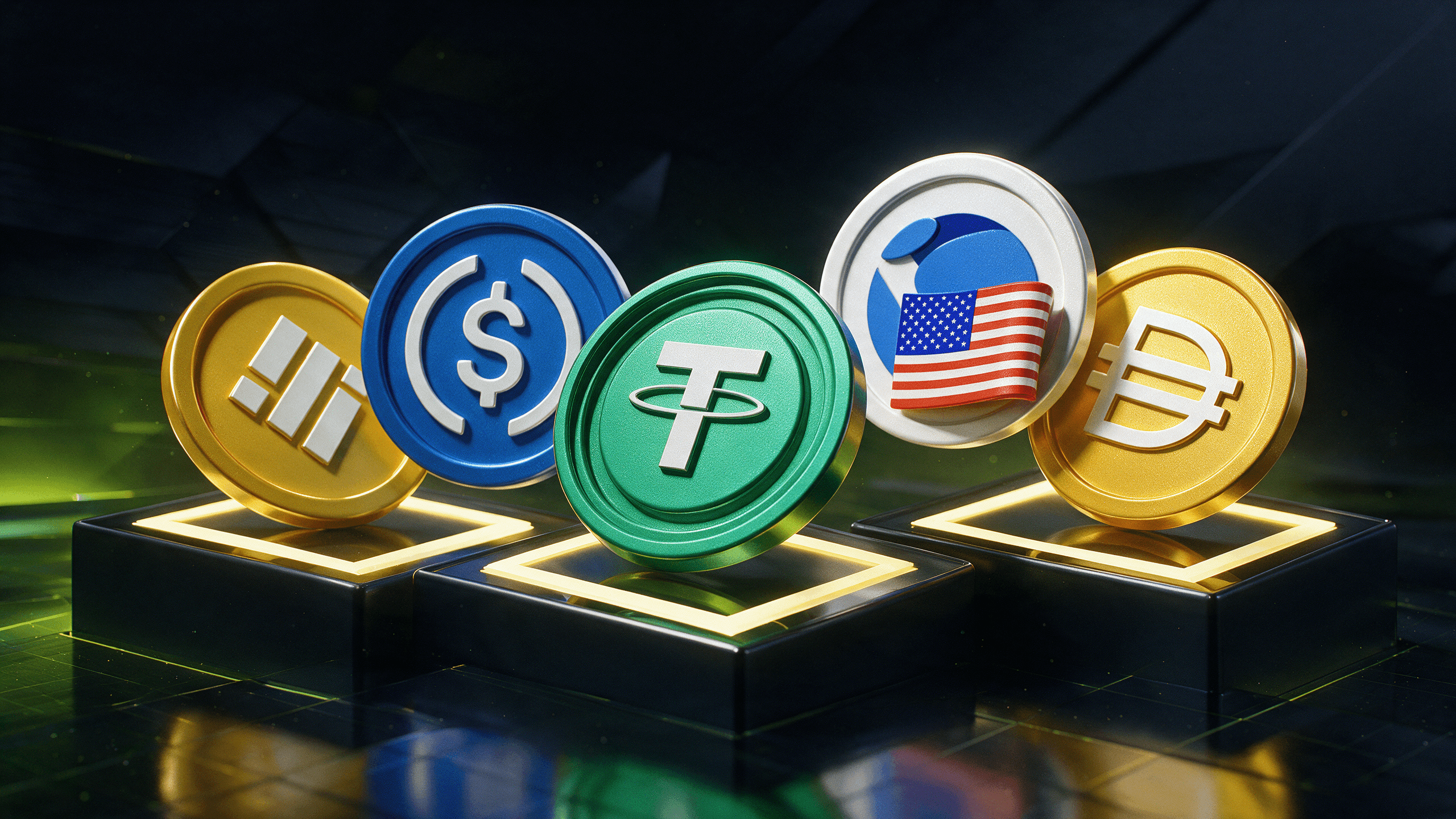
What Is a Stablecoin? How Stablecoins Work, USDT vs USDC and Why They Matter
A stablecoin is a type of cryptocurrency designed to maintain a relatively stable value by tracking another asset, most commonly the US dollar.
Unlike cryptocurrencies such as Bitcoin, Ethereum, Solana, or BNB, which can move significantly in price, stablecoins are designed to reduce volatility.
That makes them useful for payments, crypto transfers, trading, storing dollar-denominated value, and funding crypto platforms.
Stablecoins such as USDT and USDC are among the most widely used examples.
In this guide, we explain what stablecoins are, how they work, how USDT and USDC compare, what risks users should understand, and why stablecoins are useful for crypto casino and sportsbook players.
What Is a Stablecoin?
A stablecoin is a digital asset designed to track the value of another asset.
In most cases, that reference asset is a traditional currency such as the US dollar.
For example, a dollar-denominated stablecoin is typically designed so that:
1 token ≈ $1
The goal is not usually to create large price appreciation. Instead, stablecoins are designed to provide a more predictable unit of value inside the cryptocurrency ecosystem.
Why Were Stablecoins Created?
Crypto markets can be highly volatile.
Bitcoin, Ethereum, Solana, and other cryptocurrencies can gain or lose value quickly.
That creates a problem for users who want to remain within the crypto ecosystem but do not want their entire balance exposed to constant market price changes.
Stablecoins help solve that problem by providing a blockchain-based asset designed to remain relatively close to a traditional currency.
This makes them useful for:
Crypto trading
Payments
International transfers
Holding dollar-denominated crypto balances
Decentralized finance
Crypto casino deposits
Sportsbook deposits
How Do Stablecoins Work?
Different stablecoins use different mechanisms to try to maintain their target value.
Some are backed by reserves held by an issuer, while others use crypto collateral or blockchain-based mechanisms.
The basic idea remains the same:
The stablecoin is designed to stay close to the value of the asset it tracks.
For a US dollar stablecoin, the goal is generally to keep the market price close to $1.
What Are the Main Types of Stablecoins?
Stablecoins can generally be grouped into several categories.
| Stablecoin Type | How It Works | Typical Example |
|---|---|---|
| Fiat-Backed | Issued by a company and designed to be supported by reserve assets. | USDT, USDC |
| Crypto-Backed | Backed by cryptocurrency collateral, often managed through smart contracts. | Varies by protocol |
| Algorithmic | Uses automated mechanisms intended to influence supply and demand. | Varies by project |
These approaches can involve very different risk profiles, so users should understand how a stablecoin works before using it.
What Are the Most Popular Stablecoins?
The two best-known dollar-denominated stablecoins are USDT and USDC.
Both are designed to track the value of the US dollar, but they are separate assets issued by different organizations.
| Stablecoin | Ticker | Target Value |
|---|---|---|
| Tether | USDT | Approximately $1 |
| USD Coin | USDC | Approximately $1 |
You can read our dedicated guides to USDT and USDC for a deeper explanation of each stablecoin.
USDT vs USDC
USDT and USDC are similar because both are designed to maintain a value close to one US dollar.
However, they are separate tokens with different issuers, ecosystems, supported blockchain networks, and market usage.
| Feature | USDT | USDC |
|---|---|---|
| Type | Fiat-backed stablecoin | Fiat-backed stablecoin |
| Target Value | Approximately $1 | Approximately $1 |
| Issuer | Tether | Circle |
| Common Use | Trading, payments, transfers, crypto balances | Payments, transfers, trading, DeFi, crypto balances |
Neither stablecoin should automatically be considered better for every user. The most practical choice can depend on the wallet, exchange, blockchain network, liquidity, and platform support available to you.
Stablecoins vs Bitcoin
Stablecoins and Bitcoin serve different purposes.
Bitcoin is a market-traded decentralized cryptocurrency whose price can rise or fall significantly.
A dollar stablecoin is designed to maintain a value close to one US dollar.
| Feature | Stablecoin | Bitcoin |
|---|---|---|
| Price Goal | Track another asset | Market determined |
| Volatility | Designed to be relatively low | Can be significant |
| Typical Use | Payments, transfers, trading, stable balances | Transfers, payments, holding BTC |
This difference can be especially important for users who want to understand the approximate dollar value of their cryptocurrency balance.
Stablecoins vs Ethereum, Solana and Other Cryptocurrencies
Ethereum, Solana, BNB, TRX, and Litecoin are market-traded cryptocurrencies.
Their prices can change independently of the US dollar.
Stablecoins are different because their primary purpose is generally price stability rather than price appreciation.
You can learn more about these networks in our guides to:
Why Do Traders Use Stablecoins?
Stablecoins are widely used in cryptocurrency trading because they provide a way to move between volatile assets and a more stable dollar-linked asset.
For example, a trader holding Bitcoin may decide to sell BTC into USDT or USDC without immediately withdrawing funds to a traditional bank account.
This can make it easier to:
Move between different cryptocurrencies
Reduce short-term exposure to market volatility
Hold funds on supported exchanges
Transfer value between crypto platforms
Why Are Stablecoins Useful for Payments?
One challenge with paying in volatile cryptocurrencies is that the value of the asset can change quickly.
A payment worth $100 in cryptocurrency today may be worth more or less shortly afterwards.
Stablecoins reduce that problem because their value is designed to remain closer to a traditional currency.
This can make prices easier to understand for both the sender and receiver.
Stablecoins and Blockchain Networks
One of the most important things to understand is that the same stablecoin can sometimes exist on multiple blockchain networks.
For example, USDT can be available across different blockchain ecosystems.
This means that seeing the same coin ticker on both platforms is not enough.
The sending and receiving network must also be compatible.
When depositing any cryptocurrency on Highrollz, always use the exact blockchain network displayed inside your Highrollz wallet.
Never guess the network or choose a different network simply because it has a lower transaction fee.
Do Stablecoins Have Transaction Fees?
Stablecoins can have transaction costs, but those costs often depend on the blockchain network being used rather than the stablecoin itself.
For example, transferring the same stablecoin through two different blockchain networks may result in different:
Network fees
Confirmation times
Wallet address formats
Transaction requirements
Always review the details shown by your sending wallet before confirming a transaction.
Are Stablecoins Always Worth Exactly $1?
No.
Dollar-denominated stablecoins are designed to remain close to $1, but their market prices can sometimes move slightly above or below the target value.
This can happen because of:
Market demand
Available liquidity
Exchange conditions
Concerns about an issuer or protocol
Broader crypto market events
A stablecoin maintaining its target value is often described as keeping its peg.
What Does It Mean When a Stablecoin Depegs?
A stablecoin is said to depeg when its market price moves meaningfully away from the value it is designed to track.
For example, a dollar-denominated stablecoin trading well below $1 could be described as having lost or weakened its peg.
A depeg can be temporary or more serious depending on the cause.
This is why stablecoins should not be treated as completely risk-free simply because they are designed to maintain a stable price.
Are Stablecoins Safe?
Stablecoins can reduce price volatility, but they still carry risks.
Potential risks can include:
Issuer risk
Reserve risk
Smart contract risk
Blockchain network risk
Wallet security risk
Depegging
Incorrect network selection
Phishing and fraudulent wallet addresses
The exact risks depend on the stablecoin and how it is structured.
Users should understand what they are holding rather than assuming every stablecoin works in the same way.
Can You Gamble With Stablecoins?
Yes. Some crypto casinos and sportsbooks support stablecoins as deposit options.
Highrollz supports stablecoins including USDT and USDC.
Once a supported deposit has been credited, the balance can be used across eligible areas including:
Online slots
Live casino
Table games
Highrollz Originals
Sports betting
Live betting
Esports betting
Why Use Stablecoins at a Crypto Casino?
One of the main advantages of using stablecoins for online gambling is easier bankroll tracking.
Consider two users who each deposit approximately $1,000:
One deposits Bitcoin. The other deposits USDT.
If the Bitcoin price changes significantly, the dollar-equivalent value of the first player's crypto can change even without placing a bet.
The USDT balance is instead designed to remain closer to its original dollar value.
This can make it easier to separate:
Casino wins and losses
Sports betting results
Cryptocurrency market movements
Do Stablecoins Change Casino Odds?
No.
Using USDT or USDC does not change the mathematical outcome of a casino game.
The cryptocurrency used to fund your account does not alter:
RTP
House edge
Game mechanics
Sportsbook odds
Bet settlement rules
Stablecoins simply change the type of digital asset used to fund the account.
Stablecoins for Sports Betting
Stablecoins can also be useful for sportsbook players.
Because the balance is designed to stay closer to a fixed dollar value, it can be easier to track betting performance without also accounting for major crypto price fluctuations.
For example, a bettor may find it easier to calculate:
Total stake
Profit and loss
Average bet size
Bankroll changes
without constantly converting a volatile cryptocurrency into its current dollar value.
How to Deposit Stablecoins on Highrollz
The exact process depends on the stablecoin you choose.
1. Open Your Highrollz Wallet
Log in and open your Wallet.
2. Select Deposit
Choose your preferred supported stablecoin, such as USDT or USDC.
3. Check the Blockchain Network
Review the exact network displayed in your wallet.
4. Copy the Deposit Address
Copy the address shown by Highrollz.
5. Open Your External Wallet or Exchange
Go to the platform where your stablecoins are currently stored.
6. Select the Matching Network
The network used by the sending wallet must match the supported network displayed by Highrollz.
7. Verify the Details
Double-check the address, network, and amount.
8. Send the Transaction
Confirm the transfer and wait for the required blockchain confirmations.
Stablecoins vs Fiat Currency
Stablecoins are designed to track traditional currencies, but they are not the same thing as holding money in a bank account.
| Feature | Stablecoin | Traditional Fiat |
|---|---|---|
| Format | Blockchain-based token | Government-issued currency |
| Storage | Crypto wallet or supported platform | Cash, bank, or payment account |
| Transfers | Blockchain network | Traditional financial networks |
A token designed to track one US dollar is therefore not identical to having one US dollar deposited in a traditional bank account.
Frequently Asked Questions About Stablecoins
What is a stablecoin in simple terms?
A stablecoin is a cryptocurrency designed to maintain a relatively stable value by tracking another asset, usually a traditional currency such as the US dollar.
What are examples of stablecoins?
USDT and USDC are two widely used examples of dollar-denominated stablecoins.
Are stablecoins cryptocurrencies?
Yes. Stablecoins are digital tokens that use blockchain technology, but unlike many cryptocurrencies, they are designed to track another asset.
Are stablecoins always worth $1?
No. Dollar stablecoins are designed to remain close to $1, but their market prices can temporarily move above or below that level.
What is a stablecoin depeg?
A depeg occurs when a stablecoin moves meaningfully away from the value it is designed to track.
Is USDT a stablecoin?
Yes. USDT is a dollar-denominated stablecoin issued by Tether.
Is USDC a stablecoin?
Yes. USDC is a dollar-denominated stablecoin issued by Circle.
Are stablecoins safer than Bitcoin?
Stablecoins are designed to experience less price volatility than Bitcoin, but that does not mean they are free from risk. They involve different risks, including issuer, reserve, blockchain, wallet, and depegging risk.
Can I use stablecoins on Highrollz?
Yes. Highrollz supports stablecoins including USDT and USDC. Always use the exact deposit instructions and blockchain network displayed inside your Highrollz wallet.
Do stablecoins improve casino odds?
No. The cryptocurrency used to fund your account does not change RTP, house edge, sportsbook odds, or game outcomes.
Use Stablecoins on Highrollz
Stablecoins combine blockchain-based transfers with a value designed to remain more stable than many traditional cryptocurrencies.
For casino and sportsbook users, they can make it easier to understand the approximate dollar value of a balance without constantly accounting for movements in Bitcoin, Ethereum, Solana, or other crypto markets.
Highrollz supports stablecoins including USDT and USDC across eligible casino, live casino, Originals, sportsbook, live betting, and esports products.
Before sending any stablecoin, always verify your token, blockchain network, wallet address, and transaction amount.
Play responsibly and only gamble with funds you can afford to lose.
