
How to Play Blackjack: Rules, Card Values and Payouts
Learn how blackjack works, including card values, hitting, standing, doubling down, splitting, blackjack payouts and the main rules beginners should know.
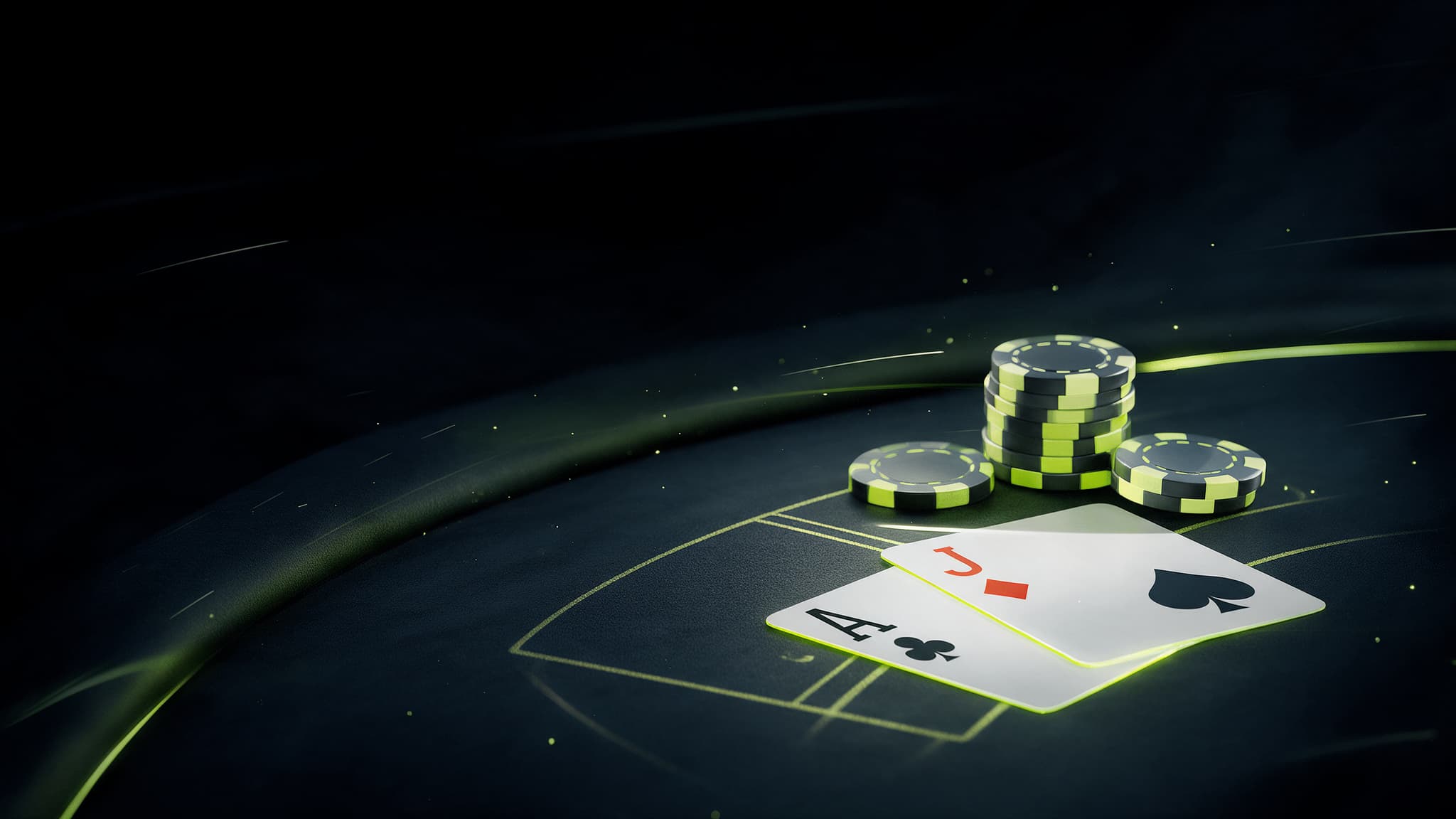
How to Play Blackjack: Rules, Card Values and Payouts
Blackjack is a casino card game where the goal is to beat the dealer without going over 21.
You do not need to reach exactly 21 to win. You simply need a hand with a higher value than the dealer, provided your total does not exceed 21.
This guide covers the basic rules, card values, player decisions and common blackjack payouts.
What Is Blackjack?
Blackjack is played between the player and the dealer.
Each side receives cards, and the value of those cards determines the strength of the hand.
The main goal is to:
Finish with a higher hand value than the dealer
Stay at 21 or below
Or win automatically if the dealer goes over 21
If your hand goes above 21, you bust and lose the round.
Blackjack Card Values
The card values are simple:
| Card | Value |
|---|---|
| 2 to 10 | Face value |
| Jack, Queen, King | 10 |
| Ace | 1 or 11 |
The ace is flexible because it can count as either 1 or 11 depending on which value gives the stronger legal hand.
What Is a Blackjack?
A blackjack is a two-card hand containing:
One ace
One 10-value card
Examples include:
Ace + 10
Ace + Jack
Ace + Queen
Ace + King
This gives a total of 21 with the first two cards.
A natural blackjack is usually stronger than an ordinary 21 made with three or more cards.
How Does a Round of Blackjack Work?
A typical round works like this:
You place your bet.
You receive two cards.
The dealer receives cards according to the game rules.
You decide whether to hit, stand, double down or split where allowed.
The dealer completes their hand.
The hands are compared.
What Does Hit Mean in Blackjack?
Hit means asking for another card.
You may continue hitting as long as the game allows and your hand has not gone above 21.
For example:
10 + 5 = 15
You might choose to hit and receive another card.
If the next card is a 4, your total becomes:
19
What Does Stand Mean?
Stand means keeping your current hand and taking no more cards.
Once you stand, your turn is complete and the dealer continues according to the table rules.
What Does Bust Mean?
You bust when the value of your hand goes above 21.
For example:
10 + 8 + 5 = 23
Because 23 is above 21, the hand loses immediately.
What Is a Soft Hand?
A soft hand contains an ace that can still count as 11 without making the total exceed 21.
For example:
Ace + 6 = Soft 17
The ace counts as 11, giving a total of 17.
If you draw a 7, the hand becomes:
Ace + 6 + 7 = 14
The ace changes from 11 to 1 to prevent the hand from busting.
What Is a Hard Hand?
A hard hand either contains no ace or contains an ace that must count as 1.
For example:
10 + 7 = Hard 17
Unlike a soft 17, there is no flexible ace value protecting the hand from a high next card.
What Is Double Down?
Double down allows you to increase your original bet, usually by up to the same amount, in exchange for receiving one additional card.
After that card, you normally must stand.
Example:
You bet $10.
You double down by adding another $10.
Your total bet becomes $20, and you receive one final card.
What Does Split Mean?
If your first two cards are the same value, you may be allowed to split them into two separate hands.
For example:
8 + 8
can potentially be split into:
Hand 1: 8 + new card
Hand 2: 8 + new card
A second bet equal to the original bet is usually required for the new hand.
Rules for splitting can vary between blackjack games.
Can You Split Aces?
Many blackjack games allow aces to be split.
However, split aces often have special rules.
For example, you may only receive one additional card on each split ace.
A 21 created after splitting aces may also be treated as a normal 21 rather than a natural blackjack.
Always check the table rules.
What Is Insurance in Blackjack?
Insurance is a side bet that may be offered when the dealer's visible card is an ace.
It is essentially a bet that the dealer has blackjack.
The insurance wager is normally separate from the main hand.
Because insurance has its own mathematics, beginners should understand how it works before using it rather than treating it as automatic protection.
What Is a Push?
A push happens when the player and dealer finish with the same hand value.
For example:
Player: 19
Dealer: 19
In a standard push, the original bet is normally returned.
How Does the Dealer Play?
The dealer does not choose freely in the same way as the player.
The dealer follows fixed rules.
A common structure is:
Hit on 16 or below
Stand on 17 or above
However, one important variation is whether the dealer:
Stands on soft 17
Hits on soft 17
This rule can affect the mathematics of the game, so check the table information before playing.
How Do You Win in Blackjack?
You can win a hand in several ways:
You have a higher total than the dealer without exceeding 21
The dealer busts while you remain at 21 or below
You receive a natural blackjack and the dealer does not
Common Blackjack Payouts
Payout rules can vary by table, but common structures include:
| Outcome | Common Payout |
|---|---|
| Normal win | 1:1 |
| Natural blackjack | Often 3:2, depending on the table |
| Push | Original bet normally returned |
| Insurance | Often 2:1 if the dealer has blackjack |
Some tables may use different blackjack payouts, including 6:5 instead of 3:2.
Always check the payout rules before placing a bet.
What Does 3:2 Blackjack Mean?
A 3:2 blackjack payout means you win $3 for every $2 wagered on a natural blackjack.
For example, with a $20 bet:
$20 × 1.5 = $30 profit
Your original $20 stake is also returned, giving you $50 total back.
What Does 6:5 Blackjack Mean?
A 6:5 payout means you receive $6 for every $5 wagered on blackjack.
For a $20 bet:
$20 × 1.2 = $24 profit
This pays less than 3:2.
For this reason, payout rules are important when comparing blackjack tables.
Blackjack vs 21
A natural blackjack and an ordinary hand totaling 21 are not always treated the same.
For example:
Ace + King = Blackjack
while:
7 + 7 + 7 = 21
Both total 21, but the natural blackjack may receive a special payout and usually has priority over a normal 21.
Does Blackjack Have a House Edge?
Yes.
Like other casino games, blackjack has a mathematical house edge.
The exact figure depends on several factors, including:
Table rules
Number of decks
Blackjack payout
Dealer soft-17 rules
Whether doubling or splitting is restricted
The decisions made by the player
Unlike slots, blackjack allows players to make decisions that can affect the mathematical house edge.
Is Blackjack Based Only on Luck?
Chance determines which cards are dealt, but player decisions also matter.
Choosing whether to hit, stand, split or double can affect the expected outcome of the hand.
This is why blackjack has something called basic strategy.
Our next blackjack guide will explain blackjack basic strategy and how the recommended decisions are determined.
What Is Basic Strategy?
Basic strategy is a mathematically calculated set of decisions for different player hands and dealer upcards.
It helps determine when the statistically preferred action is to:
Hit
Stand
Double
Split
Basic strategy does not guarantee that you will win a specific hand.
It is designed to reduce the house edge by making mathematically stronger decisions over time.
Blackjack vs Slots
Blackjack and slots work very differently.
| Feature | Blackjack | Slots |
|---|---|---|
| Player decisions | Yes | Usually limited to bet and feature choices |
| Main objective | Beat the dealer without exceeding 21 | Land qualifying winning combinations |
| Strategy | Basic strategy can affect expected return | Spin outcomes cannot be controlled by strategy |
If you want to understand slot mechanics as well, see our online slots beginner's guide.
How to Play Blackjack on Highrollz
To explore blackjack on Highrollz:
Open the Highrollz casino.
Browse the available blackjack or table games.
Select a game.
Check the table rules and payout information.
Choose your bet.
Play according to the available table actions.
Different blackjack titles may use different rules, betting limits and payout structures.
What Should Beginners Check Before Playing Blackjack?
Before joining a table, check:
The minimum and maximum bet
Whether blackjack pays 3:2 or 6:5
Whether the dealer hits or stands on soft 17
How many decks are used
When doubling is allowed
Splitting rules
Any side bets
Frequently Asked Questions About Blackjack
What is the goal of blackjack?
The goal is to beat the dealer with a higher hand value without going above 21.
Is blackjack always 21?
You do not need exactly 21 to win. A hand of 18 can beat a dealer hand of 17, for example.
What happens if both player and dealer have 20?
That is normally a push, meaning the original bet is returned.
What is the best possible blackjack hand?
A natural blackjack: an ace plus a 10-value card as the first two cards.
What happens if I go over 21?
You bust and lose the hand immediately.
Can blackjack be played with strategy?
Yes. Basic strategy uses mathematics to identify the recommended decision for different hand combinations.
Does blackjack pay 3:2?
Many tables do, but some use different payout rules such as 6:5. Check the table rules before playing.
Learn the Rules Before You Play
Blackjack is easy to understand at a basic level: beat the dealer without going over 21.
The deeper part of the game comes from understanding when to hit, stand, split and double down, as well as how different table rules affect the mathematics.
Our next guide will cover blackjack basic strategy and explain the mathematical logic behind those decisions.
Play responsibly and only gamble with funds you can afford to lose.
